
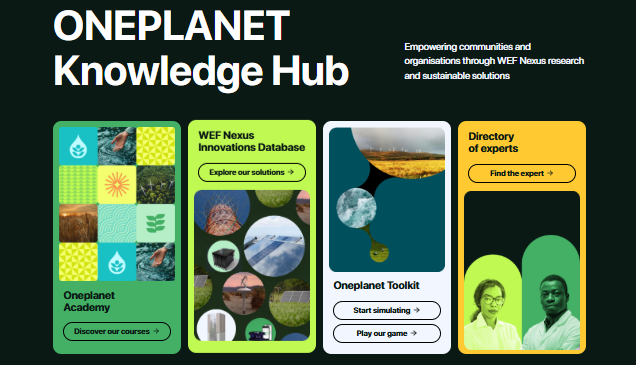
As the global community grapples with the accelerating impacts of climate change, the traditional method of managing resources in isolation—treating water, energy, and food as separate sectors—has proven insufficient. In response, the ONEPlanET project has developed a sophisticated digital ecosystem: the Knowledge Hub. This platform is designed to provide African policymakers, researchers, and civil society with the analytical rigor and technical literacy required to manage these interconnected resources effectively.
The Knowledge Hub serves as a bridge between scientific modeling and real-world application, facilitating a “just transition” that prioritizes both environmental sustainability and social equity.
Technical Innovation: The ONEPlanET Toolkit
The centerpiece of the Hub is a dual-layered toolkit that caters to both high-level technical analysis and broad-based stakeholder engagement.
ONESim: Evidence-Based Policy Simulation
For technical experts and policy advisors, ONESim offers a robust environment to model and compare energy transition scenarios. Utilizing data from three distinct African case studies in Mali, South Africa, and the cross-border region of Tanzania and Malawi, the tool allows users to:
-
Quantify Trade-offs: Visualize how a policy decision in the energy sector might impact water availability for agriculture.
-
Model Pathways: Test various development strategies to identify which configurations offer the highest resilience against climate shocks.
-
Support Strategic Planning: Provide empirical evidence to justify infrastructure investments and national resource strategies.
ONEPlay: Interactive System Dynamics
Complexity often acts as a barrier to inclusive dialogue. ONEPlay addresses this by utilizing a “serious game” format. By simulating the WEF Nexus in an interactive environment, users can observe the ripple effects of their decisions in real-time. This tool is instrumental in building an intuitive understanding of system dependencies, making it an essential resource for community leaders and non-technical stakeholders.
Capacity Building and the Innovation Database
Sustainable development requires more than just tools; it requires the human capital to utilize them. The Knowledge Hub addresses this through two specialized pillars:
-
The ONEPlanET Academy: A comprehensive e-learning platform that democratizes access to WEF Nexus education. The Academy provides modular courses covering everything from fundamental concepts to the socio-economic implications of integrated resource management.
-
The Innovations Database: To move from theory to implementation, the Hub hosts a curated repository of over 100 software and hardware solutions. Each innovation is indexed by its Technology Readiness Level (TRL) and funding potential, providing a direct roadmap for investors and local organizations looking for proven technologies.
A Collaborative Infrastructure for the AU and EU
The Knowledge Hub is designed to foster a transcontinental network of expertise. Through the Expert Directory, the platform connects African and European professionals, facilitating a bidirectional flow of knowledge. This collaborative framework ensures that the tools remain relevant and that the solutions developed are grounded in local realities while benefiting from international best practices.
Key Stakeholders Served:
-
National and Regional Policymakers: Seeking to align sectoral goals with international climate commitments.
-
Investors: Looking to identify de-risked, Nexus-compliant renewable energy and agricultural projects.
-
Researchers and Students: Requiring open-source data and modeling frameworks for advanced climate studies.
-
Civil Society: Aiming to ensure that resource management remains inclusive and benefits rural communities.
A Blueprint for Resilience
The ONEPlanET Knowledge Hub represents a shift from reactive problem-solving to proactive, systemic management. By empowering local institutions with open-source tools and deep technical insights, the project is helping to ensure that Africa’s growth is underpinned by secure food systems, reliable clean energy, and sustainable water management.
As we move toward 2030, this Hub stands as a vital resource for anyone committed to a resilient and prosperous future for the African continent.