
What is the “Why” behind Africa’s first Water-Energy-Food (WEF) Living Lab?
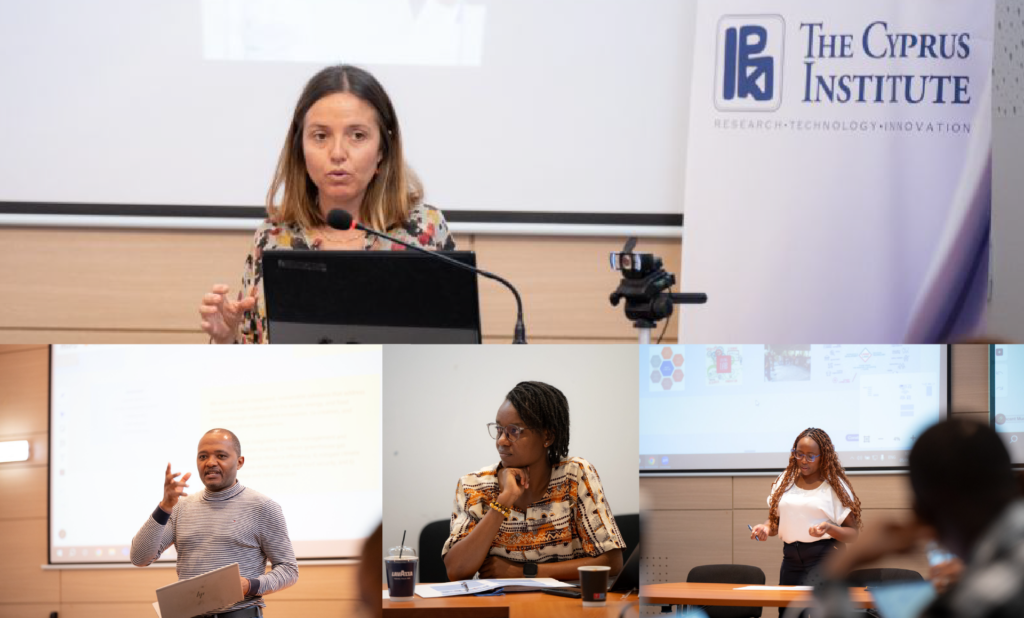
On Day 4 of the WEF Transitional Living Lab – Cyprus Edition, participants moved beyond technical modeling to tackle the foundational elements of sustainable innovation: Purpose, Vision, and Mission. Hosted by The Cyprus Institute, this five-day intensive training is a cornerstone of the ONEPlanET project’s commitment to co-designing tools that work for real people in real contexts.
Laying the Groundwork: Operations and Engagement
The morning sessions focused on the strategic DNA of the Living Lab. For a WEF Nexus approach to succeed in the Songwe, Inkomati-Usuthu, or Niger River basins, it requires more than just data—it requires a clear operational framework.
Key areas of action planning included:
-
Team Roles & Operational Excellence: Defining how multidisciplinary teams move from theory to field implementation.
-
The Quintuple Helix Model: Ensuring inclusive engagement by bridging the gaps between academia, industry, government, culture, and the environment.
-
Strategic Communication: Developing internal and external flows to keep stakeholders across Africa and Europe aligned.
The World Café: Turning Hackathon Ideas into Lab Reality
In the afternoon, Esti Sanvincente led a dynamic “World Café on Hackathon Challenges.” This session was designed to bridge the gap between “sprint” innovation and long-term sustainability.
Participants explored how the raw, creative energy of hackathon ideas can be integrated into the long-term design of the WEF Living Lab. By treating the hackathon as a “feeder” for the Lab, ONEPlanET ensures that the most promising climate-smart technologies and resource management strategies have a clear path to development.
“The goal isn’t just to innovate; it’s to create an ecosystem where innovation is continuous, inclusive, and grounded in the specific needs of African communities.”
A Walk Through History
To conclude a day centered on building future legacies, the delegation stepped into the past with a guided walking tour of the Nicosia Walled City. Led by Mehmetcan Soyluoglu, the tour offered a moment of reflection on the rich history of Cyprus, reminding participants that sustainable development is always deeply intertwined with local culture and heritage.
What’s Next for ONEPlanET?
As we move toward the final day of the Cyprus Edition, the focus shifts to finalizing the roadmap for the ONEPlanET Toolkit and the Knowledge Hub. These resources will empower African policymakers and researchers to simulate scenarios and optimize resources for a just green transition.
Stay Connected
The ONEPlanET project is a collaborative effort between 11 partners across Europe and Africa. To follow our journey and learn more about our three regional case studies:
-
Visit our Website: oneplanetproject.eu
-
Join the Community: Sign up for our Newsletter